Merchandising App Checklist: Evaluate Features, ROI & Vendor Support
Investing in a Merchandising Management App is a major commitment that affects all areas of your retail execution—from field efficiency to head office strategy. Without a structured evaluation checklist, brands risk selecting a system that either fails to integrate with existing infrastructure or, worse, breaks down when your field team needs it most. A strategic checklist ensures you select a solution that provides long-term reliability, actionable intelligence, and true return on investment (ROI).
Does the App Guarantee Flawless Execution and Reliability in the Field?
The primary purpose of a merchandising app is to empower the field force. The system must be robust, easy to use, and capable of operating under all real-world conditions to prevent data loss or execution delays.
1. Offline Capability and Data Sync:
- Can the app capture 100% of data (photos, forms, GPS) in areas with zero connectivity? The system must guarantee that all data collected offline is securely stored locally and automatically synced the moment a connection is re-established, ensuring data integrity across remote sites.
2. Speed and User Experience (UX):
- How quickly can a merchandiser complete a full store audit (e.g., in under 15 minutes)? The user interface must be intuitive, requiring minimal taps and offering large, clearly labelled buttons to speed up data capture and reduce field fatigue.
3. Image Recognition Accuracy and Speed:
- What is the solution’s proven accuracy rate for validating planogram compliance from a photo? The platform must demonstrate near-instantaneous analysis of shelf images to identify OOS items, facing counts, and product placement, providing immediate feedback to the field rep.
4. Dynamic Form and Task Management:
- Can the system automatically load a unique checklist based on the store type, previous visit issues, or current promotions? The app must offer conditional logic in its forms, removing unnecessary questions and guiding the merchandiser only through relevant tasks.
How Robust Is the System’s Data Intelligence and Integration Capability?
An app is only as good as the insights it generates. A premium solution must transform raw field data into actionable business intelligence (BI) and integrate seamlessly with your wider enterprise technology stack.
1. Real-Time BI Dashboarding:
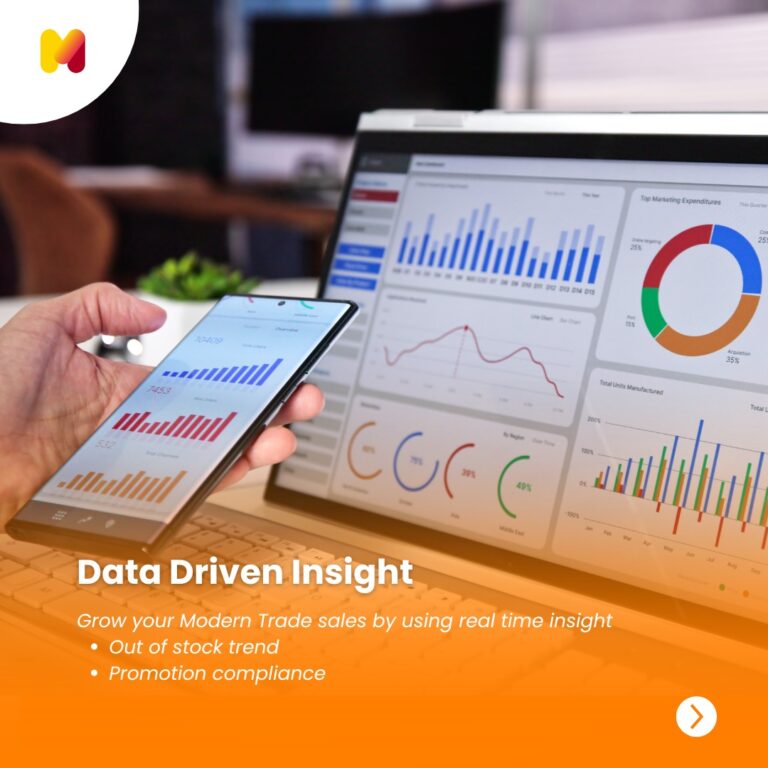
- Does the head office immediately receive compliance scores, OOS alerts, and competitive pricing data? The system must offer customizable, real-time dashboards accessible from the web, providing immediate visibility into overall market execution and specific store performance.
2. Integration with Existing Systems (ERP/CRM):
- Can the app exchange data automatically with current Sales, Inventory (ERP), and Customer Relationship Management (CRM) platforms? Look for solutions with robust APIs to eliminate manual data transfers and ensure the information collected in the field enriches other business units.
3. Actionable Alerting System:
- Can the app send proactive notifications (email/SMS) to relevant stakeholders when key performance indicators (KPIs) are violated? Alerts should trigger automatically for critical issues like high OOS rates, severe compliance failures, or competitor promotions outside of a set threshold.
4. Historical Trend Analysis:
- How easily can managers analyze compliance trends over weeks, months, and quarters for specific store clusters or geographical regions? The BI module must support deep historical queries to identify systemic execution problems or validate long-term strategy success.
What Level of Deployment Support and Scalability Does the Vendor Offer?
Choosing a vendor is a long-term partnership. It is essential to evaluate their capacity to support your brand’s growth and guarantee system stability across diverse markets.
1. Implementation and Onboarding Support:
- Does the vendor provide dedicated project managers for the initial rollout, training for field teams, and materials localization? A strong partner offers comprehensive support, ensuring rapid user adoption and successful deployment in the critical first 90 days.
2. Global Scalability and Multi-Language Support:
- Can the solution scale effortlessly from 50 to 5,000 users and support multiple languages (including complex character sets) simultaneously? Ensure the platform architecture is cloud-native and proven in diverse international markets to future-proof your investment.
3. Pricing Model Transparency:
- Is the pricing model clear, transparent, and based on per-user licensing or feature usage? Avoid hidden fees for data storage, report generation, or basic support services. Understand the total cost of ownership (TCO).
4. Security and Data Privacy Compliance:
- What certifications (e.g., ISO, GDPR, local data protection standards) does the vendor hold? Data security is paramount; ensure the platform meets industry standards for protecting competitive data and user privacy.
Are You Prepared for the Hidden Costs of Choosing the Wrong App?
The right Merchandising Management App is an investment in growth; the wrong one is a perpetual drain on resources. Failure to choose a reliable, scalable, and intelligent solution leads directly to persistent data inaccuracies, massive field productivity losses due to poor UX, and the eventual need for a costly, premature replacement. By using this rigorous checklist, you can move beyond simple feature comparisons and select a strategic partner that guarantees operational excellence and maximizes your brand’s potential at the shelf.